How should I vote?
~8min read time (hopefully resulting in ~30mins research time)
Disclaimer: I’ve tried to be politically neutral, but this post may include unintentional bias (as with all writing). It represents my current thinking on the subject, which will inevitably change with time.
As a nation we’re fed up of politics. The unending barrage of news notifying us of the shifting priorities, unkeepable promises, and petty squabbles has left us weary.
On December 12th we can exercise our democratic right to vote. It’s an opportunity to be represented and have our voices heard.
Here are some of my thoughts on figuring out who to vote for (and doing it quickly).
Why should I vote?
Before discussing which box to put a cross into, let’s first address the elephant in the room:
Many people simply don’t vote.
“My vote won’t make a difference” they say, or “I don’t want any of those numbskulls.”
Rest assured these feelings of helplessness and despair are common and understandable. After all, there are a lot of numbskulls out there. But before staying home, think about what you’re saying: “I don’t care who represents me.”
Or perhaps, at a more abstract level, “I don’t care what happens in the world.”
In not voting, consider whether you’re waiving your right to opinions. You probably shouldn’t complain when you’re sat in traffic. You probably shouldn’t complain about house prices. Perhaps you should grit your teeth and accept it when you struggle to get a doctor’s appointment. You should think carefully before expressing a political opinion to a friend, relative, or colleague. After all, you have effectively granted the politician who ends up representing you free reign to say and do “whatever they like”.
Love Democracy
If this wasn’t reason enough to vote, let’s take a quick journey through time and space.
If you were born a century ago, many people reading this simply wouldn’t have been represented in parliament. It wasn’t until 1928 that all women over the age of 21 were granted the right to vote.
During the World Wars, millions gave all they could defending democracy for future generations (us).
And in 2019, don’t forget that the UK is a comparatively advanced democracy; voting rights in most countries aren’t as liberal. In fact, over 30% of nations on earth are considered “authoritarian regimes”, where people have little or no say in how things are run.
For more than a billion people on earth, therefore, being able to vote in a fair and democratic election could be life-changing. They could influence decision-making, and ultimately create meaningful and positive change.
A vote on the 12th December may feel pointless, but remember that it is a privilege. If you can’t do it for yourself, then do it for those prevented from voting today, or for past generations who endured unimaginable struggles in the name of democracy.
How should I vote?
So now we’ve got that out of the way, let’s think about how to vote.
This is a tough question. After all, there are a lot of numbskulls out there. I’m certainly not going to try and give you the answer, but I will try to share some approaches that have helped me in the past and will undoubtedly help me with my decision this year.
We may sometimes wish we were voting directly for the Prime Minister, but we live in a country where our local Member of Parliament is our voice. They are our route to political representation, and our vehicle for making decisions on the big stage.
But most of us don’t really know if our MP votes in a way that reflects our values. This isn’t something to be ashamed of – it’s impossible to keep up with everything (let alone understand it). After all, this is why we elect people to represent us.
This election is a perfect excuse to check in on your MP’s activity. The good news is that it’s not as hard as it sounds.
Head over to https://www.theyworkforyou.com and type in your postcode1.
Click on “Voting Record”, and you are presented with simple, categorised summaries of your MP’s voting history.
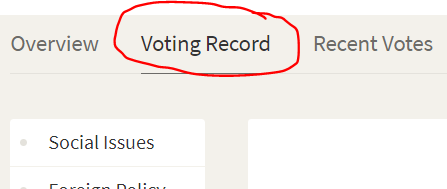
If you find yourself nodding along to the statements, then fantastic! Your MP has similar values to you, and it sounds like you now know how to vote.
For many this won’t be the case. Picking out some of the key issues for me, I can see that my MP doesn’t represent my views well.
This is where things start to get a bit trickier. You may have ruled out the incumbent, but who should you vote for instead?
This is where party politics come into play. As a starting position, it is fairly safe to assume that MPs generally vote in line with their parties. The vast majority of MPs rebel less than 5% of the time (although a small handful do more often).
With this in mind, a good place to look next is a party’s election manifesto. You don’t need to get bogged down in the detail – many news outlets produce summaries and articles explaining the main ones. If you read just one summary, the BBC should be a safe bet. If you have time, read at least a couple from reputable sources (such as the Institute for Government, The Guardian, the IFS, Telegraph, Reuters, the Associated Press, Sky News).
The thing to bear in mind about pledges, however, is that they are not guaranteed. History has shown us that election manifestos are adhered to on the whole, but that promises can be scaled back or occasionally even broken entirely (sometimes spectacularly). There is not (yet) a comprehensive study into the trustworthiness of the various party’s manifestos, so interpreting them is still a bit of an art.
Two things worth considering are 1) Do you agree with most of the changes being proposed? If so, you can probably rely that the party will implement change in a positive direction. And 2) Do any of the policies feel like overly-specific, impractical, overly-ambitious, or attention-grabbing headlines that might be difficult to keep? If so, it is probably healthy to be sceptical. Manage your expectations early and imagine that these promises will not happen. If it’s still your favourite manifesto with these things excluded, you may have found your match.
If you’re still not convinced, a next step could be a web search for the party’s candidate in your constituency. You can find out who is running very quickly using https://whocanivotefor.co.uk, which also provides candidate statements and summaries where available (in my case it also informed me of hustings taking place locally). Another good resource is https://democraticdashboard.com which compiles data from various sources, including the 2017 election result.
When reading about candidates, try and see past the fluff, the spin, and the attacks on others (which are not constructive), and see if you can work out what the person believes. Most of the time they will probably come across as a puppet to the party’s leader, regurgitating pledges or slogans from Party HQ (not always a bad thing?). Others will be quite outspoken on more locally relevant matters. This is where you will have to draw your own verdict on their suitability for office. Use your brain and follow your heart.
Politics is grey (and blue, and red, and orange, and green, and purple, and…)
The world is complex. Politics attempts to capture and codify this complexity. There is never a perfect answer, because people have opinions. Humans make mistakes and change their minds as they learn.
This is the frustrating beauty of democracy.
When you’re thinking about how to vote, strive for perfection, but don’t expect it. Use your judgement. Think about what you believe would make the world a better place, and find the party that would be closest to delivering this.
Vote selflessly - if you can separate your personal interests from your decision, then try to. After all, what’s best for you might not be best for progress. An over-simplified example is tax – most individuals struggle to vote for higher taxes on themselves, but if they did then their money may support many less fortunate people with much greater needs.
The point is that minorities are in the minority. They rely on people like you to vote to make the world a fairer place for all.
Grinding out change
In this modern world of slick service and instant gratification, it’s easy to be impatient and forget that change isn’t easy. It takes time and energy to gradually improve the world.
Sometimes a vote today is a stepping stone to a more powerful vote in 5, 10, or 15 years from now. It took nearly a century of political activity for Women to be granted the vote in the UK. The initially “extreme” political organisations gradually gained support of the general population, consequently forcing the hand of the mainstream parties.
For me, this is an argument against tactical voting. Although you may believe that the party you’d like to vote for won’t win, voting for a party that you don’t fully support in order to block a perceived worse outcome could ultimately delay progress.
It endorses policies that you don’t completely agree with, giving them a greater chance of becoming reality. It often entrenches and emboldens the status quo by funnelling votes into the most powerful parties. And most importantly, it forgets that change is gradual. Seeing an increase in votes for a minority party in one election might lead to a few more in the next, and a few more in the one after. Even if the party you vote for never comes to power, it just might force bigger parties to sit up and take notice, and result in gradual changes to their policies to reflect perceived national opinion.
Your one vote today could initiate something that helps millions of people 100 years from now.
Vote Confidently
If any of my ideas and resources have been useful, then great!
To summarise: vote, and vote with confidence in your decision.
I hope I have demonstrated that it doesn’t take much work to build that confidence.
Footnotes
1Theyworkforyou is a resource compiled by the social enterprise MySociety. They do great work to “build online technologies that give people the power to get things changed”. I worked with them around 2015-16 on a project to crowdsource reports of highway defects.
As I’ve stated in this post, politics is grey. MySociety acknowledge this and have detailed how they compile data here. They explain the nuances required when taking something complex and distilling it into something simple.

Image credit: BagelMouse, Creative Commons License